Naive Doodle Seamless Patterns
In the modern creative ecosystem, where speed and consistency are paramount, finding assets that bridge the gap between professional polish and authentic charm is a frequent challenge. Naive Doodle Seamless Patterns offer a distinct solution for professionals, entrepreneurs, and creators who need to inject personality into their projects without compromising on technical standards. These vector-based designs are not merely decorative; they represent a strategic resource for surface design, textile production, and digital marketing materials. By understanding how these patterns function within a broader workflow, users can streamline their production process while delivering high-quality results.
The Core Composition and Technical Foundation
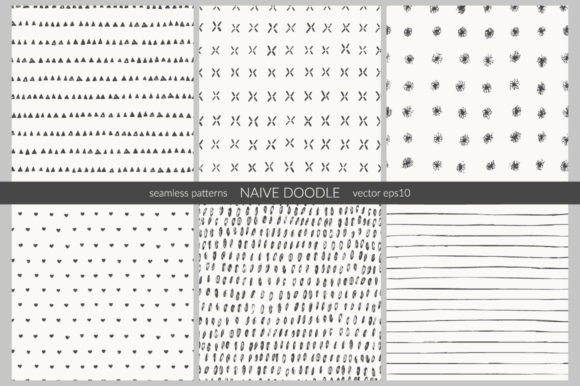
The foundation of this asset lies in its specific composition: hand-drawn naive style elements including stripes, doodle daisies, hearts, triangles, oval scribbles, and X shapes rendered in black against a light background. This minimalistic aesthetic is crucial for versatility. Unlike complex, heavy illustrations that demand significant screen real estate or print resolution, these simple geometric and organic forms allow for easy integration across various media. The inclusion of six unique seamless patterns in a single EPS10 file provides immediate value, reducing the time spent searching for complementary textures.
The technical format, EPS10, is a critical component for anyone working in a professional environment. It ensures compatibility with industry-standard software like Adobe Illustrator, InDesign, and CorelDRAW. This vector format allows for infinite scaling without pixelation, which is essential when moving from a small business card to a large-scale textile print. Furthermore, the inclusion of JPG previews facilitates quick visualization during the planning phase, allowing project managers and designers to approve concepts before diving into the final implementation.
Integrating Patterns into Creative Workflows
For graphic designers and illustrators, the integration of Naive Doodle Seamless Patterns often occurs during the initial concept development stage. Rather than creating custom backgrounds from scratch, which can be time-consuming, these pre-made assets serve as a robust starting point. A designer can layer text, branding elements, or other graphics over the pattern to create depth. Because the style is naive and unpretentious, it pairs exceptionally well with bold typography, creating a balanced visual hierarchy that draws the eye to the message rather than the background.
In the context of product packaging and wrapping paper, the workflow shifts towards efficiency and brand consistency. Small business owners and e-commerce entrepreneurs frequently need to produce limited runs of custom packaging. Using these seamless patterns allows them to maintain a cohesive brand identity across different SKUs. The repetitive nature of the pattern means that cutting and trimming waste is minimized, and the design remains consistent regardless of the package size. This scalability is a key factor in maintaining quality control during mass production.
Application in Textile and Surface Design
Textile designers face unique challenges regarding repeat alignment and colorway variations. The provided EPS10 files simplify this process by offering a clean, scalable base. When preparing a fabric swatch or a wallpaper design, the user can adjust the scale of the pattern to fit the specific weave or print resolution required. The black-on-light contrast ensures that the pattern remains legible even when printed on textured surfaces or dyed fabrics. This flexibility makes the asset suitable for a wide range of applications, from home decor accessories to fashion prints.
Strategic Use Cases for Marketing and Branding
Beyond physical products, Naive Doodle Seamless Patterns play a significant role in digital marketing and content creation. Bloggers, educators, and marketers often struggle to find visuals that convey warmth and approachability. The naive style, characterized by its childlike simplicity and lack of rigid structure, evokes a sense of authenticity and trust. This emotional connection is vital for brands targeting audiences interested in romantic holidays, weddings, or personal growth.
When creating email newsletters or social media campaigns, these patterns can serve as subtle backdrops that do not distract from the primary content. For instance, a wedding planner might use the heart and daisy motifs to create an invitation suite that feels handmade and personal. Similarly, a stationery brand could utilize the stripe and triangle elements to design a line of planners or journals. The universal nature of the design allows it to transcend specific niches, making it a valuable asset for publishers looking to expand their product lines.
Optimizing Preparation and Organization
To maximize the utility of these patterns, proper preparation and organization are essential. Before importing the EPS10 file into a project, it is advisable to inspect the layers and paths within the vector file. Ensuring that all strokes are converted to outlines and that colors are set correctly prevents rendering issues later in the workflow. For teams collaborating on a project, organizing these assets in a dedicated library folder with clear naming conventions (e.g., "Pattern_01_Stripes", "Pattern_02_Daisies") streamlines the retrieval process.
Consistency is another factor that must be managed carefully. While the patterns are diverse, using too many different styles in a single project can lead to visual clutter. A practical approach is to select one primary pattern for the main background and use secondary patterns for accents or borders. This method maintains a unified aesthetic while adding visual interest. Additionally, considering the color palette is important; while the default black-on-light version is versatile, converting the vectors to match a specific brand's color scheme can further enhance the professional look of the final output.
Compatibility and Cross-Platform Usage
The ability to use these patterns across different platforms is a major advantage for freelancers and agencies managing multiple client accounts. Whether the project involves print-on-demand services, web design, or mobile app interfaces, the vector format ensures adaptability. Web developers can export the patterns as optimized SVGs for fast loading times, while print specialists can prepare high-resolution TIFFs for offset printing. This cross-platform compatibility reduces the friction often associated with asset management, allowing creators to focus more on strategy and less on technical troubleshooting.
Long-Term Value and Scalability
Investing in high-quality assets like Naive Doodle Seamless Patterns offers long-term benefits for any creative portfolio. As businesses grow, their visual needs evolve. A pattern that works for a small batch of Valentine's Day cards today might become the signature texture for a full collection of wedding invitations next year. The timeless nature of the naive style ensures that the assets remain relevant, avoiding the pitfalls of trendy designs that quickly become obsolete.
Furthermore, the simplicity of the design allows for easy customization. Users can add their own elements, such as logos or specific icons, to the existing pattern without disrupting the overall flow. This capability fosters creativity and encourages experimentation. For educators and hobbyists, these patterns provide an accessible entry point into surface design, allowing them to create personalized gifts or classroom materials without needing advanced illustration skills.
Conclusion on Practical Implementation
Ultimately, the value of Naive Doodle Seamless Patterns lies in their ability to simplify the creative process while enhancing the final output. They act as a bridge between technical precision and artistic expression, fitting seamlessly into workflows ranging from initial brainstorming to final production. By understanding the specific attributes of these patterns—their vector format, their minimalist composition, and their thematic versatility—professionals can leverage them to save time, reduce costs, and deliver higher quality work. Whether for a romantic holiday campaign, a wedding series, or everyday stationery, these assets provide a reliable foundation for building compelling visual narratives.
As you integrate these patterns into your routine, remember to treat them as dynamic tools rather than static decorations. Experiment with scales, rotations, and combinations to discover new possibilities. The goal is not just to use the pattern, but to make it an integral part of your brand's story. With the right approach, these six seamless patterns can transform ordinary projects into memorable experiences, proving that sometimes, the simplest designs yield the most profound results.